As a society, I believe we’ve got seeking balance all wrong.
I don’t believe in finding balance and staying there.
Because what would be the fun in that? Where would the growth lie in that?

Moreover, how can we navigate an ever changing life full of new opportunities if we remain in one place the whole time?
Sure, balance plays a key role in strength and stability. It sits comfortably alongside the reproductive system, respiratory system, digestive system and even our mental wellbeing. But if we spend our lives believing we always need to exist in a perfectly balanced state, where does our capacity for change actually live?
So, let’s take a step back.
Homeostasis is the body’s ability to maintain a relatively stable internal environment, despite changes happening around us.
The root of homeostasis comes from Ancient Greek:
Homeo meaning “similar” or “like”
Stasis meaning “standing still” or “stability”
And obviously, homeostasis is essential to the way our bodies function. Body temperature wouldn’t be regulated, blood sugar wouldn’t stay within healthy limits, water and salt levels would drift out of whack, and our cells simply wouldn’t be able to perform the jobs they’re designed to do.
Our bodies are pretty amazing.

Even through changing physical and psychological environments, countless feedback systems are constantly working behind the scenes to keep us within healthy operating ranges.
When we move outside those ranges, the body gets to work nudging us back. That’s homeostasis doing exactly what it’s meant to do.
BUT!
What happens when life doesn’t give us a chance to settle?
What happens when the deviations don’t come as one-off events, but become the norm? Modern life has a funny way of dealing out stressors. Sometimes they’re huge. Sometimes they’re as simple as opening Instagram first thing in the morning and comparing yourself to Lauren from your old job who’s apparently just bought a villa in Tuscany and also has an 8 pack of abs.

I’ve said it before and I’ll say it again.
Our physiology and our psychology are deeply intertwined. One is constantly influencing the other.
It starts with feeling bloated. Then digestion becomes unpredictable. Suddenly you’re wondering if you’re intolerant to dairy, gluten or life itself. Next thing you know, you’re sitting in a doctor’s office looking for answers. I know because I’ve been there.
Sometimes stress has nothing to do with it.
Sometimes it has everything to do with it.
But it’s worth asking:
whether the stressful period that somehow stretched into two years at your last job has been influencing your body all along.
Which brings me to something I think deserves a lot more airtime.
Allostasis.
Rather than simply returning us to a set point, allostasis is the process by which the body achieves stability through change. It’s how we anticipate, adapt and adjust to life’s constantly shifting demands.
Because God only knows we need that anchor after the cascade of change life loves throwing our way.
The root of allostasis comes from Ancient Greek too.
Allo means “other” or “variable.”
Stasis still means “standing.”
Together, the idea can be translated to stability through change. And that’s where I think the magic lies.
Homeostasis and allostasis are like two dancing partners.
Allostasis is how the body makes that possible when life refuses to stay still.
So while homeostasis is about maintaining balance, allostasis is about achieving that balance through flexible adjustments.
This is why brief, manageable challenges can be so powerful.
A new exercise routine. Active breathwork. Having an uncomfortable conversation. Public speaking. Cold water. Learning something that makes you feel wildly incompetent for a while.
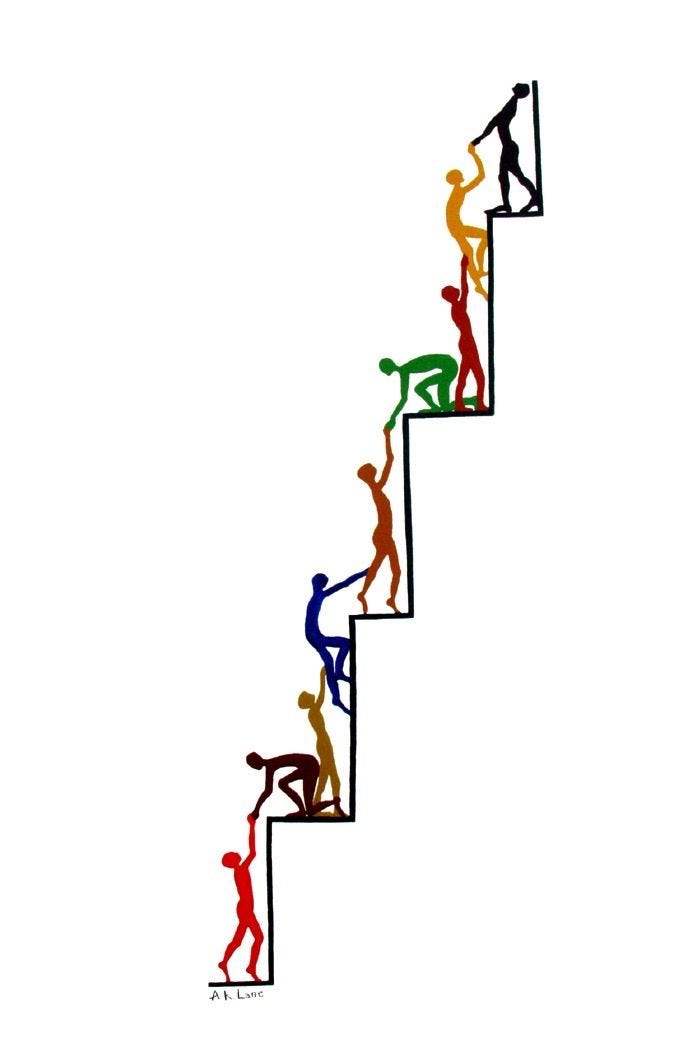
None of these are valuable because they keep you comfortable.
They’re valuable because they ask your nervous system to adapt. And when those periods of challenge are followed by adequate recovery, you’re building something incredibly useful: the capacity to recover efficiently after stress.
You’re expanding your comfort zone instead of living inside the old one forever.
The only time this gets tricky is when there is too much change or challenge.
Allostatic load is a real thing, and is what happens when chronic stress becomes harmful and leads to burnout, anxiety, or other sticky health issues.
The load of allostatics is the cumulative wear on the body from repeatedly activating stress-response systems, especially when recovery doesn’t fully complete before the next stressor hits. Chronic stress isn’t damaging because of the stress response, it’s damaging because the system never gets to return to baseline, and every one of those incomplete cycles of stress and non-recovery adds cost.
Resilience isn’t about “not being activated.” because that just isn’t reality. We can be activated so much of the time! I rather like to think of resilience as efficient allostasis.
What practices like breathwork, movement, quality sleep and nervous system regulation are helping us train.
So I’m out here advocating for pushing out of the comfort zone, but keeping the comfort blanket close by. Psychology might call this gently pressing at the window of tolerance, finding what your edge feels like, playing with it, and coming back to centre.