
This year, I’ve seen too many people around me lose their lives to mental health. A battle with the chemicals in their brain, lost in a single day, because this existence on planet earth feels not enough. Or too much. Or perhaps somewhere in the middle. Feeling too ordinary. Feeling like their body wasn’t worth fighting for anymore. Either way, somewhere along the scale, they decided that enough was enough, and gave up the fight. Who knows how long that fight had been going on for? Their whole lives? That day?
As of May this year, 1.2 billion people worldwide are living with a mental disorder, nearly double the number recorded in 1990, with a peak among 15-19 year olds. Does that tell us that these thoughts are more likely to have been circling, or simply lying dormant, since those teenage years? The questioning could go on and on. But it’s never done anyone any good, because really, the answers will never be known. The only way we can possibly answer the questions is by looking at how we, the ones who keep walking on the physical realms of this planet, live here and now. By considering how we think about, talk to, and love our friends who are experiencing mental health challenges, whether they’re still with us physically on planet earth or not.
Because there’s power in knowing people walk alongside us on this journey without judging or blaming.
It disheartens me to read that general attitudes to mental health have dropped to levels last seen 12 years ago. Meanwhile, the conversation around mental health has grown so much that, in just the last 5 years, the Google search term “Mental Health News” has increased by 350%. '
Suffering in the headlines gets clicks.
Negative news catches eyes.
A 2023 study found that negative words in news headlines increase online consumption, especially on topics like government and the economy. Reading about the struggles of others makes it feel as though there’s something we can do to help. But when it comes to acceptance in general, there seems to be a disconnect. An apparent growing desire to keep the impact of mental health separate from the wider community. In the UK, when the public were asked whether the best therapy for many with mental illness is to be part of a normal community, 72% agreed. Down from 79% in 2019. While 72% is still high, it doesn’t change the fact that it’s a 7-point drop.
The apparent deteriorating discourse around mental health in conversations on traditional and social media means these trends may well continue, especially in the age of fake news and artificial intelligence. The content machine keeps turning, giving every Tom, Dick and Harry the chance to share their take with the world.
Enter… the manosphere.
Not to lay the blame on social media alone, since there are of course plenty of positive uses of it too, but researchers in Florida found that exposure to social media content such as photos, memes or videos involving ethnic discrimination led users to feel higher levels of depression and anxiety.
Social media can evoke feelings of isolation, comparison, and disconnection. Paired with worsening stigma in the media, this can lead to greater isolation from peers. The opposite of what we as humans thrive on: a strong sense of community.
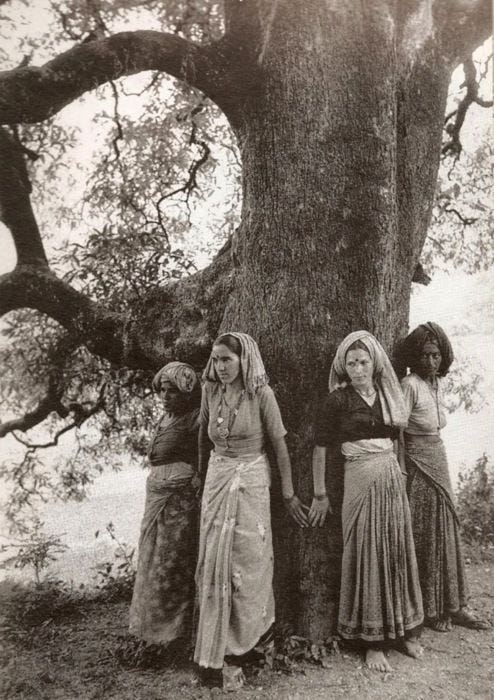
Community is that sense of being part of something bigger than ourselves. Sharing connections with people who hold similar ideas and values, or even, god forbid, people we feel close enough to that we can accept when they challenge us, or we challenge them.
I was talking with a dear friend this week, and we both landed on the same thought: that people who help us grow through challenges are the ones who bring depth in relationships. Telling a friend the truth, even when it’s uncomfortable, is what we need more of in this world. Hearing icky truths also helps us speak up for ourselves when something doesn’t feel right.
Beyond that, community drives us to feel less alone, reducing stress and isolation. In fact, one study from the North East of England found that, at a national level, having someone to rely on in tough times is the second-biggest factor explaining the wellbeing gap between high- and low-wellbeing countries.
With community comes belonging. With belonging comes the ability to share what’s really going on up there. Belonging is, in fact, a basic human need, alongside food, water and shelter. In 1995, psychologists Roy Baumeister and Mark Leary published a landmark paper proposing that the “need to belong” is a fundamental human motivation. They argued that humans are biologically wired to form and maintain lasting, positive social bonds, and that failing to do so causes real psychological and physical distress.
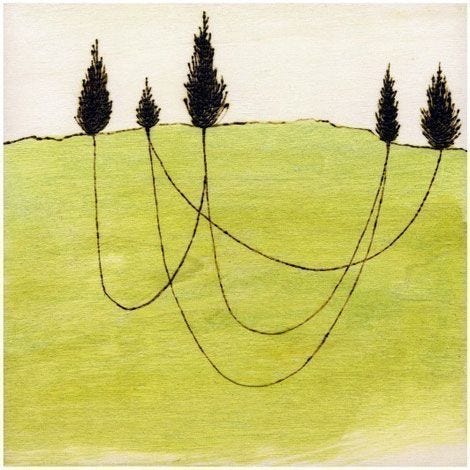
We’re built, as human beings, to move in packs and belong to a tribe. It’s in our blood (anthropologists argue that our ancestors survived because they formed tight-knit tribes where trust, cooperation, and shared purpose were non-negotiable; these tribes shaped identity, language, and even spirituality), and it’s in our neuroscience. The amygdala activates when we see outsiders, signalling potential threat. The brain’s reward system releases dopamine when the group succeeds, reinforcing loyalty. The medial prefrontal cortex responds strongly to in-group members, dulling empathy for outsiders. Oxytocin strengthens trust within the group but also heightens suspicion of strangers. Our brains are wired to help us survive, letting social identity override critical thinking. These automatic processes are why belonging to a group feels so good, and unless our brains change, they will keep doing so for as long as the human race exists.
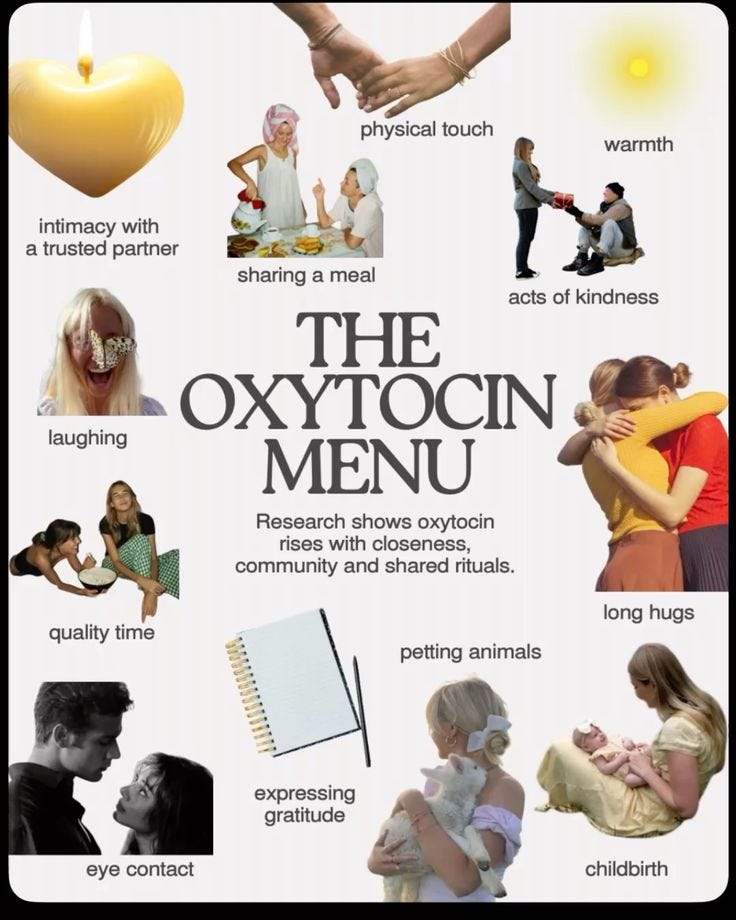
So when that circle is cultivated, where our presence in a group feels natural, our mental and physical health can truly thrive.
That’s why I’m so passionate about creating spaces that bring new and old friends together. Places to share experiences alongside a tribe you can reflect on, laugh about, and remember months or years from now, chatting over a wine one Saturday night.
This October 10th is World Mental Health Day. A dear friend, Imogen, and I, alongside Mvmt.studio and Aura Wellness Bar, are fundraising for global mental health. Specifically the charity ‘Women for Women International’, supporting women experiencing trauma in war-torn countries.
Expect pilates, breathwork, meditation, ‘sunny’ shots, and a good ol’ fashioned chinwag.
More details and booking here.
With love.